
Timeline : The Beatles
The BBC-TV program Top Of The Pops broadcasts The Beatles new promotional video for "Lady Madonna," which, oddly enough, is made up entirely of clips from the band's recording of "Hey Bulldog."
The newly formed Apple Records - a label founded by The Beatles - takes a pass on signing the relatively unknown David Bowie, sending his manager a stock rejection letter ("we don't feel he's what we're looking for at the moment").
Apple Music, the Beatles' new label, runs their famous "This Man Has Talent" ads in Britain's New Musical Express, seeking demo tapes from unknown artists. Most are never heard but pile up in Apple's offices, and the majority of the label's signings are acquired through acquaintances.
While recording vocals for "Revolution," John Lennon does some improvised ranting that is later used in the head-scratching "Revolution 9."
Fresh from a retreat to India, The Beatles begin recording the White Album at Abbey Road Studios in London. The first song they work on is "Revolution."
The Beatles' Apple Boutique, a psychedelic clothing store located at 94 Baker Street in London, closes after seven months of bad business practices and rampant theft. With the group and its intimates having had the pick of the remaining inventory the night before, Apple Boutique employees are instructed to simply let people in off the street to take whatever merchandise they like. The store was closed that evening for good.
The Beatles hold their "Mad Day Out," an all-day group photography session across London, which produces most of their well-known latter-day photographs, including the cover of Life and the inside gatefold of their Beatles 1967-1970 album.
The up-and-coming UK band The Iveys sign to the Beatles' label Apple Records, which rechristens them Badfinger. They become the first signing to generate hits for the label, but their story does not end well as Apple falls apart and Badfinger ends up in a legal hell that drives two members to suicide.
The Beatles' fourth film, the animated fantasy Yellow Submarine, premieres in London. Although the four band members in the picture are voiced by professional actors, the band itself makes a cameo in the finale, leading movie audiences through the song "All Together Now."
The Beatles' new enterprise, Apple, enters its new corporate headquarters on 3 Savile Row, London, later the site of their famous "rooftop concert."
In America, The Beatles release the Paul McCartney-penned "Hey Jude" with John Lennon's "Revolution" on the B-side. It hits #1 a month later and stays for nine weeks, longer than any other song in 1968.
In the middle of recording "Back In The U.S.S.R.," Beatles drummer Ringo Starr gets frustrated, leaves the session, and takes a vacation to Sardinia. Paul McCartney takes his place on drums to complete the track. When Ringo returns, he's welcomed back with flowers on his drum kit.
The Beatles' "Hey Jude" (backed with "Revolution") hits #1 in America. It holds the top spot for nine weeks, the longest of any Beatles single.
Mary Hopkin's "Those Were The Days," produced by Paul McCartney and released on the Beatles' Apple Records, goes to #1 in the UK, knocking off "Hey Jude." It stays for six weeks before being bumped by Joe Cocker's cover of the Beatles' song "With A Little Help From My Friends."
The Beatles begin recording "Happiness Is A Warm Gun." The title comes from a headline in American Rifleman magazine.
The Beatles pause their Abbey Road Studios recording sessions for "Birthday" so that they can run back to Paul McCartney's house and watch the British-television premiere of the 1956 American film The Girl Can't Help It, featuring Little Richard and Fats Domino. Suitably inspired, they return to the studio after the viewing and complete the song that night.
The Beatles record most of "Glass Onion," John Lennon's song about fans who suss out hidden messages in his lyrics.
Eric Clapton records the guitar solo for The Beatles' "While My Guitar Gently Weeps."
The Beatles play to a live audience for the first time in two years when they record promotional films for "Hey Jude" and "Revolution" at Twickenham Studios in front of an audience of about 100. It goes so well, they decide to make a documentary, which becomes Let It Be.
Ringo returns to The Beatles after quitting in frustration during the White Album sessions. He finds his drum kit covered in flowers.
For his cannabis possession charge, John Lennon is fined $360 in a London court. The judge believes John's explanation that he no longer uses marijuana and had merely forgotten about the stash. Wife Yoko Ono is entirely cleared of charges. Lennon is the first Beatle to be charged with such a crime.
The Beatles release The White Album, a double album that contains both the soothing "Blackbird" and discomfiting "Helter Skelter."
The Beatles' Yellow Submarine film premieres in New York.
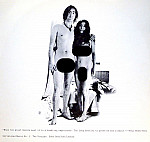 John Lennon and Yoko Ono release the album Unfinished Music No.1: Two Virgins with a cover photo of the pair naked. Many record stores stock it in a brown paper wrapper.More
George Harrison releases Wonderwall Music, becoming the first member of The Beatles to release a solo album.
The Beatles' ninth studio album, The Beatles (aka The White Album), hits #1 in America.
 The Beatles stage their famous rooftop concert on the roof of Apple Records in London. After performing a few songs, including "Get Back" and "Don't Let Me Down," the police shut them down as a large crowd gathers. It is The Beatles' last public performance.More
Billy Preston arrives at Apple Studios, where he helps The Beatles complete the Let It Be album. Preston gives them a musical jolt but more importantly provides a buffer for their infighting - George Harrison had quit the group 12 days earlier.
Former Beatles drummer Pete Best wins a defamation suit against his former group. Best sued over remarks Ringo made in an interview implying that he was kicked out of the band because of drug use.
Frustrated by a film crew recording the Let It Be sessions and plans his bandmates are making for a concert he wants no part of, George Harrison quits The Beatles, writing in his diary: "Got up. Went to Twickenham. Rehearsed until lunchtime. Left The Beatles. Went home." He is lured back a few days later with assurances that the concert would be cancelled and his wishes respected.
©2026 Songfacts®, LLC