
Music History Events: Innovations
February 7, 1979 Stephen Stills records the first major-label album using all-digital equipment, but it's never released, which means that Ry Cooder's Bop Till You Drop will get the honor.
January 28, 1977 Buzzcocks release the their EP Spiral Scratch on their own independent label, distributing it at live shows, via mail order and at record stores around their stomping grounds of Manchester, England. It sells over 15,000 copies, proving it's possible to succeed without a major label and leading a wave of DIY UK punk bands.
April 25, 1975 A forebear to Michael Jackson's "Thriller" video, the Alice Cooper horror/music special Alice Cooper: The Nightmare (featuring Vincent Price) airs on ABC.
July 17, 1974 In West Hampstead, London, The Moody Blues open the world's first Quadrophonic recording studio.
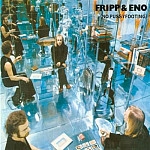 August 5, 1973 Brian Eno and Robert Fripp finish recording their first collaborative album, (No Pussyfooting). It is a combination of Eno's experiments with tape recorders and Fripp's "Fripptertronics" electric guitar technique, recorded in three sessions over the course of a year, starting on September 8, 1972.More
January 24, 1970 Dr. Robert Moog unveils the "minimoog" synthesizer, one of the first portable synth keyboards, at a price of $2,000. The American Federation of Musicians at first opposes the instrument, fearing its "realistic" settings will put horn and string sections out of work. The minimoog becomes the first synth to go on tour with rock bands.
April 20, 1968 Apple Music, the Beatles' new label, runs their famous "This Man Has Talent" ads in Britain's New Musical Express, seeking demo tapes from unknown artists. Most are never heard but pile up in Apple's offices, and the majority of the label's signings are acquired through acquaintances.
March 5, 1968 Jerry Lee Lewis opens as Iago in Catch My Soul, a rock musical version of Shakespeare's Othello, in Hollywood.
January 6, 1968 Gibson patents their "Flying V" electric guitar.
August 20, 1967 The New York Times reports on a pioneering method of noise reduction created by Dolby Labs which makes home recording on blank cassette tapes possible.
July 10, 1962 NASA launches the Telstar 1 satellite, the first active communications satellite, inspiring the Tornadoes' instrumental hit "Telstar" later that year.
August 11, 1956 Richard Goodman and Bull Buchanan, recording as Buchanan and Goodman, enter the charts with "Flying Saucer," the first song to use what's called the "Break In" technique, dropping in bits of other hit songs throughout. The song eventually peaks at #3.
April 10, 1956 Leo Fender patents the successor to his popular "Telecaster" model of electric guitar, this time called the "Stratocaster."
October 12, 1955 Chrysler introduces the world's first in-car sound systems -- vinyl record players, complete with an assortment of classical records, mounted under the dashboard.
September 9, 1955 Seeburg introduces their latest jukebox, which not only holds a record 100 singles but is also capable of playing the same number of EPs.
February 26, 1955 For the first time, sales of the newer, smaller 45rpm records outpace those of the old 78rpm variety.
March 5, 1951 Rock guitar distortion is invented when Willie Kizart plays "Rocket 88" using an amp that was damaged when it fell out of the van transporting him and the other members of Ike Turner's band to their recording session in Memphis.
March 31, 1949 RCA introduces the 45 rpm record, which eventually becomes the format of choice for "singles," becoming more popular than the 78 rpm format by 1958.
February 1, 1949 RCA introduces the 45 RPM record. It's 7 inches wide and plays at a faster speed than the traditional 33-1/3 for 12-inch albums. The format takes off, and 45s become known as "singles."
December 23, 1947 Three scientists at Bell Labs in New Jersey demonstrate the transistor, which leads to the invention of small, portable "transistor" radios. The scientists win the 1956 Nobel Prize for their work.
March 1, 1941 The world's first commercial FM radio station, Nashville's W47NV, begins broadcasting.
January 5, 1940 The FCC hears the first demonstration of FM radio.
August 18, 1937 The first FM (frequency modulation) radio station in the US, Boston's WGTR (later WAAF), is granted its construction permit by the FCC.
July 28, 1933 The first singing telegram is sent - to popular crooner Rudy Vallee, on the occasion of his 32nd birthday.
September 17, 1931 RCA Victor unveils its new invention, the 33 1/3 rpm long-playing or "LP" record, at the Savoy Plaza Hotel in New York. However, the company badly overprices the record players themselves, leading the new format to lie dormant for years until Columbia revives it in 1948.
October 18, 1922 The British Broadcasting Corporation, or BBC, the first national broadcasting corporation, is founded on this day in London.
August 20, 1920 In Detroit, what will become WWJ (950 AM) becomes the first radio station in America to start broadcasting.
October 17, 1919 The Radio Corporation of America, soon to be simply known as RCA, is founded by General Electric as a publicly held monopoly, much the same way "the phone company" was originally envisioned.
October 21, 1908 The first two-sided vinyl record (!) was offered for sale by the Columbia label in an ad running in this week's Saturday Evening Post.
September 26, 1908 The first stereo advertisement, for an Edison Phonograph, appears in the Saturday Evening Post.
Back to Categories©2026 Songfacts®, LLC