
Music History Events: Controversies
February 15, 1970 After a Sly & the Family Stone concert runs hours late and causes over a thousand dollars in damages, the Daughters of the American Revolution impose a ban against any further rock concerts at the venue, Washington D.C.'s Constitution Hall.
October 12, 1969 Russ Gibb, a DJ at WKNR in Detroit, takes a call from a listener who tells him that if you play The Beatles song "Revolution 9" backwards, a voice says, "Turn me on, dead man." Gibb plays the record in reverse on the air, and the phone lines light up with astonished listeners offering more clues as to why Paul McCartney might be dead. For about a week, Gibb entertains a stream of rumors on the show, as ratings explode and the story goes national. Other clues include a voice at the end of "Strawberry Fields Forever" that says "I Buried Paul" (actually John Lennon saying "Cranberry Sauce") and the cover of the Sgt. Pepper album, where Paul is wearing an armband that says "OPD" - "Officially Pronounced Dead."
October 9, 1969 BBC's Top Of The Pops refuses to play the #1 hit in the country for the first time. The song, Serge Gainsbourg's "Je T'Aime Moi Non Plus," is considered one of the first "orgasm records," that is, one of the first to feature heavy female breathing and moaning.
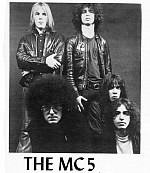 April 16, 1969 Elektra Records drop the MC5 from their roster after the group takes out an ad in an underground newspaper castigating the department store chain Hudson's for not stocking their debut album, Kick Out The Jams. Hudson's didn't want it on their shelves because of a line in the title track: "Kick out the jams, motherf--ker!"More
July 10, 1968 Early prog-rockers The Nice are banned from London's Royal Albert Hall after burning an American flag on stage as an antiwar protest.
November 10, 1967 The Beatles film three separate videos for their new single, "Hello Goodbye," at London's Saville Theatre. The three are eventually edited together to form one video, but the BBC, which has just given in to a Musician's Union ban on lip-syncing, refuses to air the clip.
February 15, 1967 The first anti-bootlegging recording laws are enacted.
August 13, 1966 With some members of the media turning on The Beatles after John Lennon's comments that they are "more popular than Jesus" are published, the Texas radio station KLUE-AM holds the first "Beatles Bonfire," where people can burn their Beatles albums.
August 12, 1966 At a Beatles press conference in Chicago to promote their American tour, the big topic is John Lennon's quote, "We're more popular than Jesus now; I don't know which will go first, rock 'n' roll or Christianity." Lennon, clearly shaken by the controversy, explains: "I was pointing out that fact in reference to England - that we meant more to kids than Jesus did, or religion, at that time. I wasn't knocking it or putting it down, I was just saying it as a fact."
November 14, 1964 At the start of her first UK tour, Dusty Springfield causes a furor when she tells a local magazine: "I wish I'd been born colored. When it comes to singing and feeling, I want to be one of them and not me. Then I see how some of them are treated and I thank God I'm white."
February 8, 1964 With "Louie Louie" under FBI investigation for obscene lyrics, the song's publisher offers $1,000 to anyone who can definitively distinguish the dirty words.
November 17, 1963 Headmaster John Weightman of Surrey Grammar School in Guildford, England, bans the popular Beatle "moptop" haircuts, explaining that "this ridiculous style brings out the worst in boys physically. It makes them look like morons."
September 10, 1962 The BBC bans Bobby "Boris" Pickett's Halloween novelty single "Monster Mash," finding it in poor taste. However, in 1973 the radio giant lifts the ban, sending a re-release of the holiday favorite to #3.
September 13, 1960 A movement to ban Ray Peterson's new single "Tell Laura I Love Her" begins in the UK when it is feared that the song's powerful story of a stock-car driver who dies young while racing for his girl's love will inspire a "death cult" amongst teens.
September 13, 1960 The FCC bans "payola," the controversial practice of paying DJs for playing songs, as a result of the scandal involving, among others, Dick Clark and Alan Freed.
August 8, 1960 Decca Records in England refuses to release Ray Peterson's latest single, "Tell Laura I Love Her," going so far as to throw away 25,000 pressings of the teen-tragedy song, which they feel is "too tasteless and vulgar for the English sensibility." A cover by Ricky Valance proves them wrong by going straight to #1. (The grisly song, in which a stock-car driver mutters the title words before he dies, ironically only reaches #7 in America.)
May 2, 1960 Dick Clark testifies before Congress on the matter of payola.More
February 8, 1960 The "payola" hearings begin, as the US government cracks down on the practice of paying for airplay on radio stations.
February 14, 1958 CBS anchorman Walter Cronkite tells viewers that the government of Iran has banned rock and roll for being unhealthy and anti-Islamic. The "unhealthy" claim is backed by Iranian doctors who warn of hip damage due to "extreme gyrations."
June 29, 1957 The government of Iran officially bans rock and roll after declaring rock dancing "harmful to health." The ban would stay in place until the 1990s.
September 18, 1956 Rock shows are banned at the US Naval Station in Newport, Rhode Island, after a fight breaks out during a Fats Domino concert.
September 17, 1956 The BBC bans Bill Haley's new single "Rockin' Through The Rye," based on the 17th-century Scottish tune "Comin' Through The Rye," to avoid offending its Scots listeners.
February 24, 1956 Police in Cleveland shut down a Rock concert under an obscure law that prohibits people under 18 from dancing in public without a guardian.
November 18, 1954 ABC Radio stations ban Rosemary Clooney's "Mambo Italiano" due to what it considers "offensive lyrics," more than likely the exaggerated Italian patois and words "goombah" and "gidrool."
February 26, 1954 Responding to the rising popularity of black music, the United States congress proposes a bill forbidding distribution of "obscene, lewd, lascivious, or filthy publication, picture, disc, transcription, or other article capable of producing sound." The bill fails.
November 6, 1953 Frankie Laine's "Answer Me" is banned by the BBC, who claim the lyrics "Answer me, Lord above" are mocking Christian prayer. Also banned is Lee Lawrence's "Crying In The Chapel."
January 26, 2022 Spotify complies with Neil Young's request to remove his music from the service. Young's issue is with the Spotify podcast The Joe Rogan Experience, which he feels is spreading false information about vaccines. Joni Mitchell also removes her music, but Spotify stands tall for Rogan, whose subscriber count grows considerably in wake of the controversy. Young returns to Spotify two years later.
March 27, 2021 Morgan Wallen's Dangerous: The Double Album, which debuted at #1 in America, logs its 10th week at the top, the most weeks for a debut chart-topper since Whitney Houston's self-titled album in 1987. In its fourth week at #1, Wallen was caught on camera using the N-word (addressed to his white friend) after a night of drinking, but instead of tanking the album when his music was pulled from radio stations, the controversy helped extend its run as fans bought and streamed it in support.
July 3, 2020 Ryan Adams publicly apologizes for mistreating women he has worked with, claiming he is now sober and chastened. Sixteen months earlier, several female musicians he worked with, including his ex-wife Mandy Moore, accused him of controlling and sometimes abusive behavior.
October 4, 2019 The blockbuster film Joker becomes the first film to use "Rock And Roll Part 2" since Gary Glitter's 2015 conviction for pedophilia. Many in the UK, where Glitter's crimes are well-known, are outraged because it earns the disgraced glam rocker substantial royalties.
Back to Categories©2026 Songfacts®, LLC